Abdul Qadeer Khan, the “father” of Pakistan’s atomic bomb, has died

The Pakistani nuclear scientist, admired for making the country the first Islamic nuclear power, was accused of illegally disseminating technologies to Iran, North Korea and Libya.
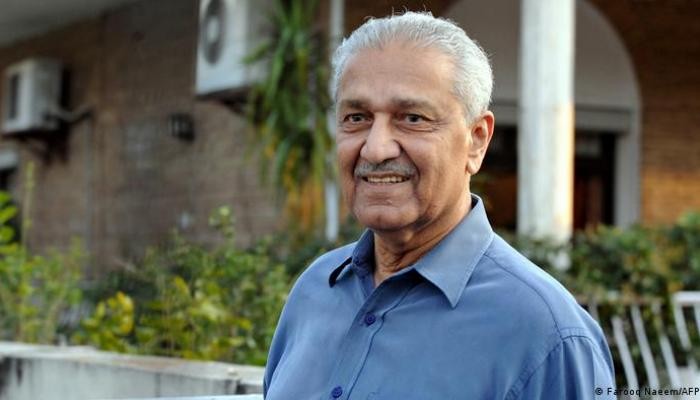
Abdul Qadeer Khan, the “father” of Pakistan’s nuclear bomb and a national hero to his admirers, died at the age of 85, Pakistani authorities announced Sunday, October 10. The Pakistani nuclear scientist, admired for making the country the first Islamic nuclear power but accused of illegally transferring technology to Iran, North Korea, and Libya, died after being transferred to the KRL hospital in Islamabad for lung problems, according to Pakistani state broadcaster PTV.
Dr. Khan had previously been hospitalized at the facility in August after testing positive for Covid-19, then sent home, before his condition deteriorated on Sunday morning, the channel said.
National hero in May 1998
Pakistani President Arif Alvi said on Twitter that he was “deeply saddened” by the death of the scientist, whom he had known since 1982:
“He helped us develop a nuclear deterrent critical to the nation’s survival, and the grateful country will never forget his services.”
Dr. Khan gained national hero status in May 1998 when the Islamic Republic of Pakistan officially became a military nuclear power, thanks to tests conducted just days after those of India, its long-time rival. He subsequently found himself at the center of a controversy, accused of illegally disseminating nuclear technology, and was placed under de facto house arrest in Islamabad from 2004 onward.
Diagnosed with prostate cancer in 2006, he recovered thanks to surgery. In 2009, a court ordered the end of his house arrest. Since then, he had remained under extremely close protection, required to inform the authorities in advance of his every move. AFP
AlloAfricaNews